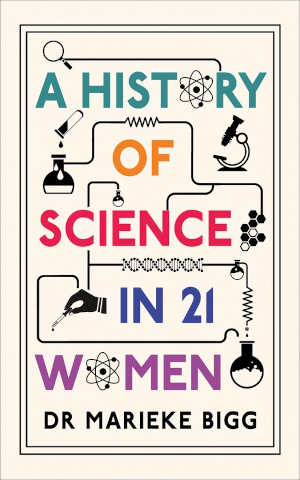

A History of Science in 21 Women
- Author: Marieke Bigg (Engeland)
- Book type: history of women in science
- Publisher: Oneworld
- To be released: September 3, 2026
- Length: 432 pages
- Format: paperback / ebook
- Prize: £ 18.99 / £ 9.99
- Buying options >
Marieke Bigg A History of Science in 21 Women reviews and information
Whenever a review of A History of Science in 21 Women, written by Marieke Bigg, the British sociologist, appears in the media, we’ll highlight it on this page.
- This is a rich and thought-provoking read that raises important questions about the role of gender stereotypes and bias in all kinds of research.” (Dr Gwen Adshead)
- “A fast-paced journey that deftly navigates the complex stories of women in science, shining a light on lesser-known figures as well as familiar names like Curie and Lovelace. Biggs’ book is a must-read for STEMinists and history lovers.” (Alanna Skuse)
Blurb of the book by Marieke Bigg on 21 famous women in science
From Ada Lovelace to Florence Nightingale, Rosalind Franklin to Tu Youyou – discover the women who changed science forever.
Imagine a scientist. White lab coat and goggles… check! A passing resemblance to Albert Einstein… yes, that too. So, most likely it’s a man. However, from radiation to climate change, pulsars to the Earth’s core – women have always stood at the forefront of scientific discovery.
Learn how Ada Lovelace’s tumultuous upbringing created the first computer programmer. Join Marie Curie as she discovers two elements and earns two Nobel prizes, all before the age of forty-five. Learn how Katherine Johnson launched the first American into space – defiant in the face of institutional racism.
A timely addition to the growing global conversation around the future of science – and who gets to shape it – A History of Science in 21 Women is a paradigm-shifting exploration of the scientists who history tried, and failed, to brush under the carpet, and why their stories still matter today.
Dr Marieke Bigg holds a PhD in sociology from the University of Cambridge where her research focused on the role of biological models in society. She is currently retraining as a psychotherapist and works as a peer support coordinator at the mental health charity Mind.