Steven Nadler Spinoza, Atheist review and information book about Spinoza’s believe in God. Princeton university Press will publish on April 7, 2026 the the new book about pilosopher Baruch Spinoza written by Steven Nadler, the Vilas Research Professor and the William H. Hay II Professor of Philosophy at the University of Wisconsin–Madison. Here you can read information about the content of the book, the author and the publication.
Steven Nadler Spinoza, Atheist reviews and information
Whenever a review of Spinoza.Atheist, written by Steven Nadler, appears in the media, we’ll highlight it on this page.
- “Steven Nadler is not only a lucid guide to Spinoza’s thinking, and not just a persuasive advocate of the Dutch philosopher’s atheism, but a wonderful, elegant, and witty writer. In fact, he is a better stylist than Spinoza himself, whose often complicated philosophical arguments are made crystal clear in this engaging book.” (Ian Buruma, author of Spinoza: Freedom’s Messiah)
- “Spinoza, Atheist is clear, accessible, and concise. One couldn’t ask for a more adept account of Spinoza’s view of what he calls ‘God or nature’ and humankind’s relation to this philosophical God—or of what it meant to be a philosophical ‘atheist’ in the seventeenth century.” (Jonathan I. Israel, author of Spinoza, Life and Legacy)
- “A fresh and fascinating take on one of Western thoughts’ most important and enigmatic minds… a nuanced defense of Spinoza that unfurls like the best kind of philosophical argument.” (Rabbi Marc Katz, Jewish Book Council)
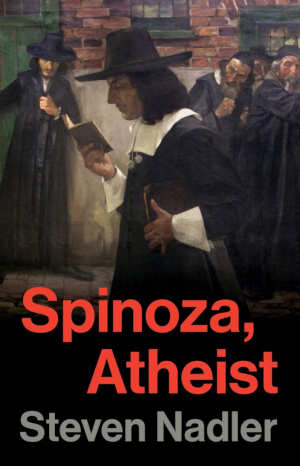

Spinoza, Atheist
- Author: Steven Nadler (United States)
- Book type: philosophy book
- Publisher: Princeton University Press
- To be released: April 7, 2026
- Length: 264 pages
- Format: hardcover / ebook / audiobook
- Prize: $ 29.95
- Buying options >
Blurb Steven Nadler book on Spinoza’s believe in God
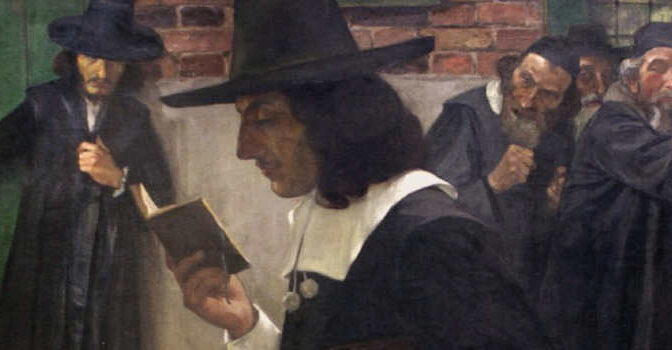
In 1656, a young Amsterdam merchant was excommunicated by his Portuguese-Jewish community in the harshest terms it had ever used. Baruch Spinoza was accused of unspecified “horrifying heresies,” but the precise reasons for his expulsion remain a mystery. When he published his Theological-Political Treatise in 1670, which was condemned as “the most atheistic book ever written,” he began to reveal to the world what his heresies may have been. Yet ever since the eighteenth century, most readers and scholars have assumed that Spinoza was a pantheist—even a “God-intoxicated man,” as the poet Novalis put it. After all, how could a person whose books are suffused with talk of God be an atheist? In Spinoza, Atheist, Steven Nadler, one of the world’s leading authorities on the philosopher, aims to settle the question and show that that’s exactly what he was.
Nadler makes a powerful case that there is no real divinity for Spinoza. God is Nature, and isn’t an object of worshipful awe or religious reverence but can only be understood through philosophy and science. There is nothing supernatural—no mystery, ineffability, or sublimity. Spinoza does speak of “blessedness” and “salvation,” but these, too, are to be understood in natural and rational terms, as the peace of mind and happiness that come from understanding ourselves and the world.
Whether Spinoza believed in God is a fascinating and enduring controversy. Spinoza, Atheist promises to transform our understanding of his views and to make clear just how radical a thinker he was and remains.
Steven Nadler was born born November 11, 1958 in New York City. He is Vilas Research Professor and the William H. Hay II Professor of Philosophy at the University of Wisconsin–Madison. His many books include Rembrandt’s Jews, which was a finalist for the Pulitzer Prize, Spinoza: A Life, Think Least of Death: Spinoza on How to Live and How to Die (Princeton), and A Book Forged in Hell: Spinoza’s Scandalous Treatise and the Birth of the Secular Age.