Tag archieven: Dalkey Archive Press

Stig Sæterbakken – Siamese

Stig Sæterbakken Siamese recensie, review en informatie over de inhoud van de roman van de schrijver uit Noorwegen. Bij Uitgeverij Dalkey Archive Press verschijnt de Engelse vertaling van Siamesisk de roman van de in 2012 overleden Noorse dichter Stig Sæterbakken. Hier lees je informatie over de inhoud van het boek, de auteur en over de uitgave.

Stig Sæterbakken Siamese recensie van Tim Donker

Een man. Een vrouw. Ouder echtpaar. Ooit moeten ze van elkaar gehouden hebben. Maar hoe gaan die dingen. Je bent jong, je ontmoet iemand, je gaat van elkaar houden, of je denkt van elkaar te houden, of je ziet hele andere dingen aan voor liefde, en je gaat trouwen, want dat is hoe het hoort te lopen in het leven. En voor je het weet is je leven alweer bijna voorbij en ben je vijftig jaar lang bij iemand geweest van wie je je nu hard afvraagt wat je ermee moet. In Siamese resteert voornamelijk afstand, afkeer, nijd en wat misschien nog het best als een vorm van stockholmsyndroom omschreven kan worden. De vrouw richt zich op het hier en nu, huishoudelijke taken, dingen die gedaan moeten worden, boodschappen, eten, klusjes. De man heeft zich teruggetrokken in de badkamer en doet niets meer dan zitten, denken en kauwgom kauwen. Dat is geen Samuel Beckett of Thomas Bernhardt, die er op het achterplat maar weer eens bijgehaald worden (want hee de situatie is absurd en vol van gal en animositeit dus met welke namen gaan we anders schermen?) maar, als je het mij vraagt, eerder Jean-Philippe Toussaint.

Dan flikkert de lamp in de badkamer, en gaat kapot. De vrouw haalt er de conciërge bij van het gebouw waar ze in wonen. Misschien is dat wat overdreven: de conciërge bellen om een lampje te vervangen. Maar allicht is dat in Noorwegen heel gebruikelijk. Wat heeft zo’n conciërge anders te doen in zo’n gebouw met, naar ik veronderstel, sociale huurappartementen.

In Siamese wisselt het vertelperspectief voortdurend tussen de man: Edwin Mortens en zijn vrouw: Erna Mortens. Maar Sæterbakken geeft blijk van zijn meesterschap door het eerste hoofdstuk door Erna te laten vertellen. Zo komt de ongemakkelijkheid van de situatie optimaal tot zijn recht. Erna loopt met de conciërge de badkamer in en daar zit haar man zwijgend in een stoel. Ze haalt er een opstapje bij zodat de conciërge de lamp eruit kan drajen. Edwin boert een paar keer luid, Erna staat er even bij, en kijkt erna, gaat weg, reddert wat in de keuken (“rommelen”, noemde mijn tante dat – heeldurdagen was zij in de keuken aan het “rommelen”, ieder kopje waaruit een van ons koffie had gedronken waste ze ogenblikkelijk af, en bovendien begon ze idioot vroeg met het avondeten, veelal reeds aan het eind van de ochtend – terwijl ze doodnormale oerhollandse gerechten op tafel zette: aardappels, vlees, groente. de aardappels waren bijna altijd gegratineerd dus allicht dienden die kort gekookt vooraleer ze in de oven gingen maar alsnog geen maaltijden waarmee een mens uren bezig moest zijn. haar groenten waren dan ook altijd volledig kapot gekookt omdat ze die meerdere keren op een dag opwarmde. maar haar jus was altijd goed op smaak, dat moet ik zeggen), totdat de conciërge terugkomt uit de badkamer. Ze biedt hem een kopje koffie aan, ze gaan zitten in de huiskamer, ze praten niet of nauwelijks, zitten daar maar, de conciërge steekt een sigaret op. Dat moet ook in het 1997 waarin Sæterbakken dit Siamesisk, zoals Siamese in de originele versie heette, het levenslicht liet zien, bijzonder onattent geweest zijn. Maar Erna zegt er niks van.

Hiermee zet Sæterbakken de lezer feitelijk op het verkeerde been. Of misschien. Op een half been. Bij nu kun je nog denken te maken hebben met een absurdistische komedie over menselijk onvermogen. Twee echtelieden die tot elkaar veroordeeld zijn, een man die verdrinkt in zijn walging en ervoor gekozen heeft de wereld de rug toe te keren; een vrouw die het liefst blijft doen alsof er niks aan de hand is. Niet raar, hij zit gewoon graag in die badkamer, moet kunnen. Zich ondertussen wel afvragend wat de conciërge ervan denken zal. Pijnlijk. Menselijk. Grappig.

Had Edwin als eerste het woord gekregen, dan had het eerste hoofdstuk er heel anders uitgezien. Woede en achterdocht hadden geprevaleerd. Bovendien had hij niet goed begrepen wat er precies aan de hand was. Niet alleen omdat de conciërge niet de hele tijd in de badkamer is, en Edwin weigert de badkamer uit te gaan. Maar ook, zo blijkt, is Edwin blind.

Pas in opvolgende hoofstukken wordt de achtergrond meer en meer ingekleurd. Edwin begon op een bepaald moment zijn zicht te verliezen, tot op het nivo waarop hij nu zit: volledige blindheid. Bovendien lijkt hij ziek te zijn. Terminaal wellicht? (alles is terminaal, zei Zappa ooit toen een journalist hem vroeg in welk stadium zijn ziekte was) Zit hij vast aan een of meerde apparaten? Het kan ook alleen maar een stoma zijn. Kleinswijltjens lang dacht ik dat hij daar in een rolstoel zat, maar het blijkt een schommelstoel te zijn. Is hij verlamd? Het lijkt erop dat hij niet eens kán opstaan. Eén of andere progressieve ziekte, kun je denken, die steeds meer van zijn lichaamsfuncties aantast. Of depriveert hij uit verkozen inactiviteit? Ook een mogelijkheid: Edwin heeft zich toegelegd op het voltijds vegeteren en omdat hij niets anders meer wil dan zitten, en denken, verzwakken al zijn andere spieren. Misschien toch niet ziek, afgezien van zijn blindheid. Erna denkt soms dat hij alles simuleert. Dat hij misschien helemaal gezond is, kan zien, haar en iedereen in de maling neemt. Sæterbakken laat de lezer heen en weer slingeren tussen beide veronderstellingen. De Edwin-hoofdstukken lezend zou je denken dat hij elk moment dood kan gaan. Wanneer je echter door Erna’s ogen kijkt is er misschien echt niet zoveel aan de hand. Gans het boek doorheen blijft het in het midden.

Misschien is Edwin onbetrouwbaar. Uiteindelijk is hij de gek. Een vent die in een schommelstoel zit in de badkamer, op de vloer een zee van kauwgompapiertjes. Hij eet niet, hij praat nauwelijks, hij schreeuwt en scheldt alleen maar. De hoofstukken waarin hij aan het woord is, zijn wel het langst en gaandeweg krijgt hij steeds meer diepte. Gedurende een groot deel van zijn leven was hij de directeur van een verzorgingstehuis, Kronsæter. Hoe hij daar weggegaan is, is niet geheel helder. Gewoon met pensioen misschien? Of moest hij weg toen hij zijn zicht begon te verliezen? Er is ook een incident geweest met een verpleegster; Edwin werd driftig om iets kleins en iedereen op Kronsæther koos de kant van de verpleegster.

Langzaamaan tekent zich het plaatje. Zijn hele leven lang al, was Edwin een temperamentvol man. Maar ook consciëntieus, toegewijd, precies, en zeer intelligent. Op het idiote af. Ja, in de Edwin-hoofdstukken neemt Siamese een beckettiaanse toon aan – het gaat over dood, verrotting, stront, vuiligheid, een enkele keer met een licht erotiese lading. Maar zijn herinneringen aan Kronsæther zijn net zo goed nietzscheaans: de wil tot macht, hoe wat de een vergaart altijd ten koste van de ander gaat. Een ex-collega over wie hij voornamelijk in deze termen nadenkt is De-Sarg; een man waarmee hij een soort haatliefde-verhouding lijkt te hebben gehad. Geen goed woord heeft Edwin over voor De-Sarg maar het lijkt wel een man geweest te zijn die hij met liefde heeft gehaat. Daarnaast denkt Edwin veel na over politieke, sociale, maatschappelijke en emotionele zaken. En komt daarbij vaak tot moje bevindingen. Bijvoorbeeld dat de wet er niet is om de burger te beschermen maar juist om hem te onderdrukken. Of neem dit idee over het huwelijk – of lange relaties tout court: “A liar, that’s what you turn into when you’re with a woman. You have to liet he whole time. Otherwise you’d never be able to keep her.” Kijk met Erna mee en je ziet een onhebbelijk monster vol chagrijn zitten daar in die stoel in de badkamer. Maar eens Edwin zelf aan het woord is, kun je niet anders dan sympathie voor hem opvatten.

Het monster, de volslagen gek in de badkamer. Erna kookt voor hem, brengt hem zijn cola – de enige drank die hij nog drinkt – en vult zijn kauwgom en zijn medicijnen steeds aan. Voorheen nam ze ook zijn persoonlijke verzorging op zich. Knipte zijn haren en zijn vinger- en teennagels. Duwde zijn nagelriemen terug. Schoor en waste hem. Daar is ze omdat ze niet echt veel dankbaarheid hierbij ontmoette mee opgehouden. Nu is Edwin vervuild, stinkend, lang haar, lange baard – om hem een nog iets sardonieser aanzien te geven allicht. Maar is Erna echt wel betrouwbaarder dan Edwin? Ze is onzeker, stil, naïef, beïnvloedbaar en een beetje karakterloos. Ze heeft zeer zeker niet per se een helderder zicht op de waarheid dat de blinde en “gestoorde” Edwin.

Misschien is het aan de lezer, of ligt het ergens in één of ander midden – misschien wat meer naar links, misschien wat meer naar rechts ervan. Geloof je Erna, dan is Edwin een vreselijke man. Bezie je het van de andere kant dan is Erna een emotieloze, ijskoude vrouw die een blinde hulpeloze man aan zijn lot over laat, hem alleen maar het hoogstnoodzakelijke brengt om hem in leven te houden en verder in huis de hele dag door met dingen bezig is waarop Edwin geen enkel zicht meer heeft. Letterlijk en figuurlijk.

Je hoeft niet heel veel fantasie te hebben om Siamese te lezen als emblematisch voor alle huwelijken. Hoe abnormaal de situatie van Erna en Edwin ook is, in essentie is het niet heel anders dan datgene waar veel mensen mee overblijven wanneer ze tientallen jaren bij elkaar zijn geweest. Ze hebben alles gegeven, de anders was ondankbaar. Ze waren en deden zoveel dat de ander nooit zag. Ten beste blijft er een kameraadschap over waarin de ander gedoogd kan worden. Maar pure weerzin is ook niet onmogelijk. Doorschoten met flitsen van genegenheid. Edwin noemt Erna Sweetie. Uit dodelijk cynisme. Maar soms ook met de compassie die de twee altijd nog voor elkaar hebben, ergens, diep verscholen onder de zwarte teer van alle andere lagen.

Iemand van de New York Times zegt: “Siamese is a difficult and brilliant book, like one of those skulls inscribed: ‘As I am now, so shall you be’ that a death besotted Romantic might have kept by his bedside.”; wel – Siamese is geen moeilijk boek. Een pijnlijk boek misschien, omdat het gaat over verval. Verval van liefde, verval van decorum, verval van aanzien. Verval van gezondheid ook. Dood gaan we allemaal, en de laatste stappen erheen zijn vaak niet de mooiste in een mensenleven. En briljant is Siamese ook niet echt. Het had briljant kunnen zijn, maar Sæterbakken laat na zijn geniale opening net iets teveel liggen. De ontwikkelingen met de conciërge, die, zo komen als we het boek al bijna uit hebben nog te weten, Olav Martiniussen blijkt te heten, zijn net iets te voorspelbaar. Al heeft Sæterbakken het einde dan wel weer zodanig open gelaten dat wat er op het allerlaatst aan de hand is een weinig in de lucht blijft hangen. En Erna is me toch iets te tweedimensionaal gelaten. Ik kon haar niet anders zien dan als Edith Bunker. De archetypische huisvrouw. Voornamelijk bezig met praktische zaken. Ondanks al het zuur dat haar ten deel valt, toch altijd loyaal aan haar man. Zelfs als ze boosaardige dingen over hem denkt, houdt ze een marge open waarin ze hem toch niet helemaal wil afvallen. Ook blijkt veel van wat ze in eerste instantie als gekheid terzijde schuift, later in het boek toch op waarheid te berusten (zoals een schuld die De-Sarg volgens Edwin nog bij hem heeft openstaan). Misschien had Edwin toch gelijk. Misschien zag Edwin het toch allemaal juist. Zulke gedachten. Zulke twijfels. Die Erna als personage in ieder geval niet krachtiger maken. Tot slot had er meer met de taal gedaan kunnen worden. De taal had gestoorder, kapotter gekund. Maar dat euvel ligt misschien eerder bij vertaler Stokes Schwartz. Die behalve literatuur ook -of misschien vooral- technisch en historisch werk heeft vertaald. Mogelijkerwijs heeft hij een te zakelijke benadering van het Noors gehad? Alleen diegenen die het Noors machtig zijn, kunnen die vraag beantwoorden.

(en hoe een boek kan zijn als een schedel met inscriptie zie ik al helemaal niet, maar voor New Yorkers zal dat allemaal wel duidelijk zijn)

Misschien had er meer in kunnen zitten, maar Siamese is al bij al een zeer fijn boek. Pijnlijk. Absurd. Grappig. En, zeker op het eind, af en toe ook regelrecht ontroerend. Een boek over liefde. Een boek over dood. Een boek over leven. Ik kende Sæterbakken eerlijk gezegd niet, ik weet niets van zijn oeuvre. Geboren in 1966, overleden in 2012 en in ieder geval dus niet bijster oud geworden. Maar dat zegt niets over een oeuvre; sommige schrijvers pennen boek na boek na boek na boek in slechts enkele jaren. Siamese verscheen in 2010 al een keer in Engelse vertaling; deze twede editie is meer dan verdiend. Een vertaling in het Nederlands zou ook mooi zijn. Misschien iets voor Koppernik?
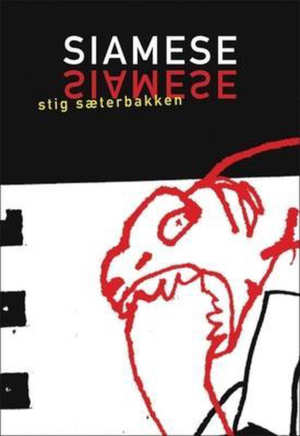

Stig Sæterbakken Siamese

Siamese

  • Auteur: Stig Sæterbakken (Noorwegen)
  • Soort boek: Noorse roman
  • Origineel: Siamesisk (1997)
  • Engelse vertaling: Stokes Schwartz
  • Uitgever: Dalkey Archive Press
  • Omvang: 164 pagina’s
  • Afmetingen: 14 x 20,3 x 1,3 cm
  • Gewicht: 227 gram
  • Uitgave: paperback / ebook
  • Prijs: € 13,50 / € 12,99
  • Boek bestellen >

Flaptekst van de Stig Sæterbakken dichtbundel

Edwin Mortens is almost blind, but has good hearing; his wife Erna is hard of hearing, but has excellent eyes. Paralyzed from the waist down, Edwin sits locked in his bathroom all day, every day, trying to liberate his mind from his body.

Edwin Mortens is almost blind, but has good hearing; his wife Erna is hard of hearing, but has excellent eyes. Paralyzed from the waist down, Edwin sits locked in his bathroom all day, every day, trying to liberate his mind from his body. The experiment is going relatively well: nearly all his bodily functions have ceased, his limbs are in a state of decay, and his digestive system is in the process of breaking down. “This body,” he says, “is a sewer.”

To pass the time, Edwin dedicates his days to chewing gum and screaming at his wife, on whom he is, nonetheless, entirely dependent; while Erna’s life, despite Edwin’s constant abuse, revolves around her hideous husband. Edwin and Erna live in a state of perfect equilibrium—fueled by habit, cruelty, humiliation, and quite possibly love—until a young maintenance man is called to replace a lightbulb in Edwin’s bathroom, and the “Siamese twins” find themselves embroiled in a new and vicious struggle for power.

Stig Sæterbakken is op 4 januari 1966 geboren in Lillehammer, Noorwegen. Hij was een romanschrijver, dichter en vertaler. Van zijn werk is tot nu toe nog geen Nederlandse vertaling verschenen. Op 24 januari 2012 overleed Stig Sæterbakken op 46-jarige leeftijd. Hij pleegde zelfmoord.

Bijpassende boeken en informatie

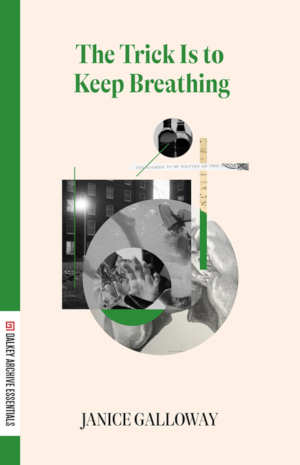
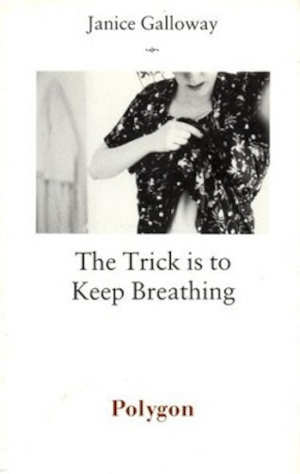
Janice Galloway – The Trick Is to Keep Breathing

Janice Galloway The Trick Is to Keep Breathing review and information about the novel from 1989 by the Scottish author. Dalkey Archive Press will publish the reissue of the 1989 novel written by Janice Galloway, the author from Scotland on May 26, 2026. Here you can read information about the content of the book, the author and the publication.

Janice Galloway The Trick Is to Keep Breathing reviews and information

Whenever a review of The Trick Is to Keep Breathing, the 1989 novel by Janice Galloway, appears in the media, we’ll highlight it on this page.

  • “This is like a Scottish Catcher in the Rye. You actually feel you’re inside this woman’s head, it is that visceral. And having experienced a downward spiral myself, I so admire her accuracy in every detail.” (Alan CummingThe New York Times)
  • “A real achievement; its dialogue sparks and its voice is true. For Janice Galloway the trick is simply to keep writing.” (Scotsman)

Janice Galloway The Trick Is to Keep Breathing

The Trick Is to Keep Breathing

  • Author: Janice Galloway (Scotland)
  • Book type: Scottish novel from 1989
  • Publisher: Dalkey Archive Press
  • To be released: May 26, 2026
  • Length: 350 pages
  • Format: paperback / ebook
  • Prize: € 16,95 / € 8,95
  • Buying options >

Blurb op de 1989 novel by Janice Galloway, the Scottish author

The widely-celebrated debut from one of Scotland’s most important authors, which tells the stark and honest story of a woman struggling to cope with the loss of her lover, that is often compared to The Bell Jar by Sylvia Plath. 

Now available again after its initial Dalkey Archive publication in 1994, Janice Galloway’s inventive first novel is about the grief and breakdown of Joy Stone, who is pushed to the limits of loneliness. The 27-year-old drama teacher spirals into anguish and self-blame after the accidental drowning of her married lover. While the novel paints a portrait of a woman enduring great emotional suffering, it is also a story of warmth and humanity; it’s the wit and irony found in moments of despair that prove to be Joy’s salvation.

First published by Polygon, an independent Scottish press, in 1989, the re-release of The Trick Is To Keep Breathing is a gift to today’s readers.

Janice Galloway was born December 2, 1955 in Ayrshire, Scotland Janice Galloway The Trick Is to Keep Breathing first edition of the 1989 novelHer debutnovel, The Trick Is To Keep Breathing, was initially published by Polygon in 1989. This novel, now regarded as a Scottish classic,  was shortlisted for the Whitbread First Novel, Scottish First Book, Italia Premio Acerbi and Aer Lingus Awards. In 2023, Galloway was prestigiously elected A Fellow of The Royal Society of Literature.

Matching books

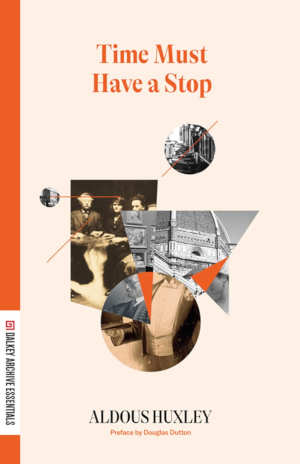
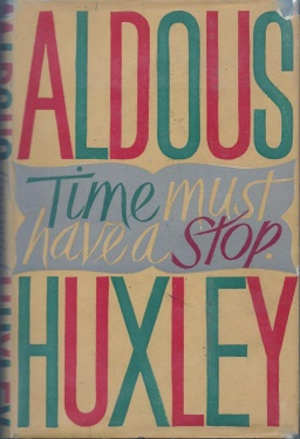
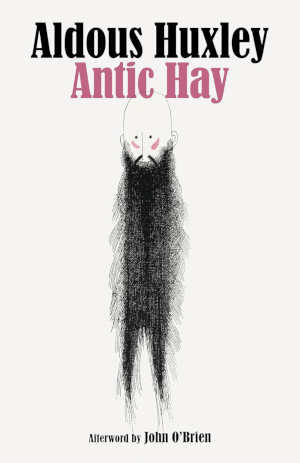
Aldous Huxley – Antic Hay

Aldous Huxley Antic Hay review and information of the contant of the 1923 novel by the English writer about Londen after World War I. Dalkey Archive Presss wil publish the reissue of the novel by Aldous Huxley on January 20, 2026. On this page you can read information about the content of the novel, the author, reviews and ordering options

Aldous Huxley Antic Hay reviews and information of the 1923 novel

When a book review appears in the media of Antic Hay, the 1923 novel by Aldous Huxley, we will highlight it on this page.

  • “Huxley is the creator-god of a beautiful new world which is wholly and peculiarly his own and which he peoples with antic folk whose adventures, always keenly intelligent and sparkling with wit, are elo­quently and continually amusing.” (Detroit News)
  • “T. S. Eliot’s The Waste Land is recalled by the casual allusions to classical lore, the devilishly clever garbling of familiar quotations and the total effect of dissolution. Mr. Huxley has the American poet’s flair for topical wit of a distinctly metropolitan flavor. . . . It is a brilliant, entertaining satire, with a faint suggestion of ‘ungestured sadness.” (The New York Times)
  • “Antic Hay has the literary delights of the intelligence questionnaire, characters who don’t talk in conversations but in charades, with satire japing sophistication as well as the more obvious targets, engaging naughtiness narrated for its own sake, rising and falling in broad com­ edy and in episodes deliciously strange and tender.” (New Republic)

Aldous Huxley Antic Hay

Antic Hay

  • Author: Aldous Huxley (England)
  • Afterword”John O’Brien
  • Book type: English novel from 1923
  • Publisher: Dalkey Archive Press
  • To be released: January 20, 2026
  • Length: 225 pages
  • Format: paperback / ebook
  • Prize: € 15,95 / € 8,95
  • Buying options >

Blurb of the Aldous Huxley novel from 1923

A social satire dissecting morally bankrupt London society just after World War I, from the author of Brave New World.

Like Hemingway’s The Sun Also Rises, Aldous Huxley’s Antic Hay portrays a world of lost souls madly pursuing both pleasure and meaning. Fake artists, third-rate poets, pompous critics, pseudo-scientists, con-men, bewildered romantics, and cock-eyed futurists all inhabit this world spinning out of control, as wildly comic as it is disturbingly accurate. In a style that ranges from the lyrical to the absurd, and with characters whose identities shift and change as often as their names and appearances, Huxley has here invented a novel that bristles with life and energy.

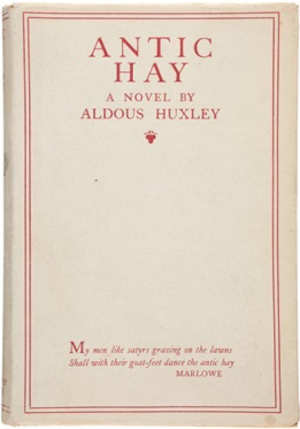
Aldous Huxley was born on July 26, 1894 in Godalming, Surrey, England. He was an English writer who spent the latter part of his Antic Hay Aldous Huxley 1923 novel by the English writer first editionlife in the United States. Though best known for Brave New World, he also wrote countless works of fiction, non-fiction, poetry and essays. A humanist, pacifist and satirist, he wrote novels and other works that functioned as critiques of social norms and ideals. Aldous Huxley is often considered a leader of modern thought and one of the most important literary and philosophical voices of the 20th century. Huxley died on November 22, 1963 at the age of 69 in Los Angeles County, California in the United States.
Matching books and information

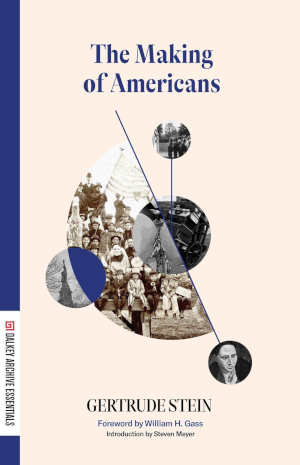
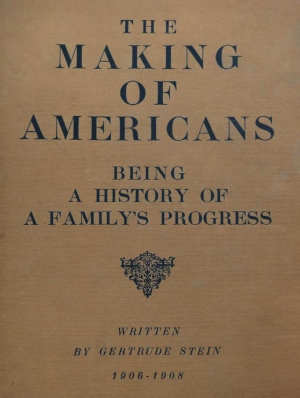
Gertrude Stein – The Making of Americans

Gertrude Stein The Making of Americans review, recensie en informatie van de Amerikaanse roman uit 1925. Op 18 november 2025 verschijnt bij Dalkey Archive Press de heruitgave van de roman uit 1925 van Gertrude Stein, de schrijfster uit de Verenigde Staten. Er is geen Nederlandse vertaling van het boek verkrijgbaar.

Gertrude Stein The Making of Americans review en recensie

  • “This sober, tender-hearted, very searching history of a family’s progress, comprehends in its picture of life which is distinctively American, a psychology which is universal.” (Marianne Moore, Dial)
  • “Indubitably the most monumental fiction to be given since the publication of Ulysses.” (Saturday Review of Literature)
  • “The Making of Americans is the first announcement of what would be Stein’s greatest legacy–to reclaim the world of the nineteenth-century woman from such weird, smutty interlopers as Flaubert and, later, Joyce, and transform it into the most exalted ground of human potentiality available to us… It is monumental, horribly flawed, and a joy to read if you just give up and drown in it.” (Matthew Stadler, The Stranger)

Gertrude Stein The Making of Americans

The Making of Americans

  • Auteur: Gertrude Stein (Verenigde Staten)
  • Soort boek: Amerikaanse roman uit 1925
  • Taal: Engels
  • Uitgever: Dalkey Archive Press
  • Reeks: Dalkey Archive Essentials
  • Verschijnt: 18 november 2025
  • Omvang: 716 pagina’s
  • Uitgave: paperback / ebook
  • Prijs: € 19,95 / € 8,95
  • Waardering redactie∗∗∗∗ (uitstekend)
  • Boek bestellen bij: Amazon / Bol / Libris

Flaptekst van de roman uit 1925 van Gertrude Stein

In The Making of Americans, Gertrude Stein sets out to tell “a history of a family’s progress,” radically reworking the traditional family saga novel to encompass her vision of personality and psychological relationships. As the history progresses over three generations, Stein also meditates on her own writing, on the making of The Making of Americans, and on America.

Gertrude Stein was born on 3 February 1874 in Allegheny, near Pittsburgh  in Pennsylvania,  in to a prosperous German-Jewish The Making of Americans Gertrude Stein novel from 1925 first editionfamily. She was educated in France and the United States, worked under the pioneering psychologist William James, and later studied medicine. With her brother Leo she was an important patron of the arts, acquiring works by many contemporary artists, most famously Picasso, while her home became a popular meeting place for writers and painters from Matisse to Hemingway. Her books include Three Lives, Tender Buttons, and The Autobiography of Alice B. Toklas. She died on 27 July 1946 in Neuilly-sur-Seine, France at the age of 72 and was burried on the Père Lachaise Cemetery in Paris.

Bijpassende boeken

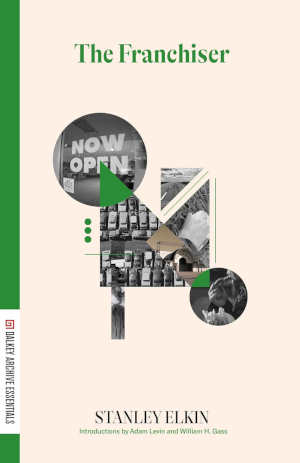
Stanley Elkin – The Franchiser

Stanley Elkin The Franchiser review and information of the content of the novel from 1976 by the American author. Dalkey Archive Essentials will republish the Stanley Elkin novel, on September 9, 2025. 

Stanley Elkin The Franchiser review

If a book review or commentary of The Franchier, the novel written by Stanley Elkin, appears in the media, we will highlight it on this page.

Stanley Elkin The Franchiser

The Franchiser

  • Author: Stanley Elkin (United States)
  • Book type: American novel, roadnovel
  • First edition: 1976
  • Publisher: Dalkey Archive Essentials
  • Released: 9 September 2025
  • Length: 400 pages
  • Format: paperback
  • Prize: €16,95
  • Order book from: Amazon / Bol

Blurb of the 1976 novel by Stanley Elkin

A tragicomic journey across America as one man attempts to create a fast food empire, and a legacy to leave behind.

From the prolific and peerless Stanley Elkin, The Franchiser follows Ben Flesh—one of the men “who made America look like America, who made America famous.” He collects franchises, traveling from state to state, acquiring the brand-name establishments that shape the American landscape. But both the nation and Ben are running out of energy. As blackouts roll through the West, Ben struggles with the onset of multiple sclerosis, and the growing realization that his lifetime quest to buy a name for himself has ultimately failed.

Stanley Elkin was born on 11 May 1930 in New York Ciry. He was an award-winning author of novels, short stories, and essays. Born in the Bronx, Elkin received his BA and PhD from the University of Illinois and in 1960 became a professor of English at Washington University in St. Louis where he taught until his death. His critically acclaimed works include the National Book Critics Circle Award-winners George Mills (1982) and Mrs. Ted Bliss (1995), as well as the National Book Award finalists The Dick Gibson Show (1972),  Searches & Seizures (1974), and The MacGuffin (1991). His book of novellas, Van Gogh’s Room at Arles, was a finalist for the PEN Faulkner Award. Other novels he published are: Boswell: A Modern Comedy (1964, debut novel), A Bad Man (1967), The Magic Kingdom (1985) and The Rabbi of Lud (1987). He died at the age of 65 on 31 May 1995 in St. Louis, Missouri of a heart attack.

Matching books

Edy Poppy – Coming. Apart.

Edy Poppy Coming Apart review, recensie en informatie over de inhoud van het boek van de Noorse schrijfster. Op 17 juni 2025 verschijnt bij Dalkey Archive Press de Engelse vertaling van Sammen. Brudd, de verhalenbundel uit 2011 van de uit Noorwegen afkomstige schrijfster Edy Poppy. Hier lees je informatie over de inhoud van het boek, de schrijfster en over de uitgave. Een Nederlandse vertaling van het boek is niet verkrijgbaar.

Edy Poppy Coming Apart review, recensie en informatie

  • “Edy Poppy’s forté is her narrative voice, which is consistently quite cold and distanced. It is as if she assumes a lab scientist’s point of view, retrieves her objects of study and pokes away at them to see how they will react. It is elegantly executed.”  (Dag og Tid)

Edy Poppy Coming Apart

Coming. Apart.

  • Auteur: Edy Poppy (Noorwegen)
  • Soort boek: Noorse verhalen
  • Origineel: Sammen. Brudd (2011)
  • Engelse vertaling: May-Brit Akerholt
  • Uitgever: Dalkey Archive Press
  • Verschijnt: 17 juni 2025
  • Omvang: 220 pagina’s
  • Uitgave: paperback / ebook
  • Prijs: € 15,95 / € 9,95
  • Boek bestellen bij: Bol

Flaptekst van het boek van de Noorse schrijfster Edy Poppy

Icy, intricate, and unflinching, Edy Poppy’s Coming. Apart. captures the zeniths and nadirs of the human experience. With the stark, poetic voice that garnered her collection Anatomy. Monotony. cult status in Norway and abroad, the writer–performance artist offers a vision of sexuality and alienation unlike any other.

Coming. Apart. is Poppy’s first collection of short fiction, and her second to be published in English. Beautifully translated from the original Norwegian by Dr. May-Brit Akerholt, her stories explore moments of labyrinthine intimacy with a cold intensity that proves impossible to forget.

Edy Poppy was born in 1975 in Bø in Norway. Her real name is Ragnhild Moe. She grew up on a farm in Bø, Telemark, Norway. She moved to Montpellier when she was 17, and spent several years in France, then London, where she worked with art, fashion, film and writing. In 2005 she published her first novel Anatomy.Monotony., which was translated into Italian, Finnish, German, Polish and English. It won the contest for best love story by Gyldendal. After seven years in London, Poppy moved to Berlin and later on spent serveral month in Buenos Aires, Lipari, Reykjavik and Rio. In 2011 she published the short story collection Coming.Apart. Its opening story, “Dungeness” was selected by the American publishing house Dalkey Archive Press (also the publisher of her novel), to be part of Best European Fiction 2015. Edy Poppy is now based in Oslo and Kristiansand.

Bijpassende boeken en informatie

Otohiko Kaga – Marshland

Otohiko Kaga Marshland recensie, review en informatie over de inhoud van de Japanse roman uit 1986. Op 9 juli 2024 verschijnt bij uitgeverij Dalkey Archive Press de Engelse vertaling van de roman uit 1968 van de uit Japan afkomstige schrijver Otohiko Kaga. Hier lees je informatie over de inhoud van het boek, de schrijver en over de uitgave. Er is geen Nederlandse vertaling van de roman verkrijgbaar of aangekondigd.

Otohiko Kaga Marshland recensie en review

  • “The result of Kaga’s effort is a sprawling indictment of modern society’s modes of organizing bodies and labor…Here’s where the novel’s length works well, as the repetition of experiences with institutionalization becomes analogous to the repetitive nature of the experiences themselves. Kaga’s examination of the lives of dozens of prisoners, characters both major and minor in his sweeping drama, is some of the most powerful and compassionate writing of the novel. His criticism of the criminal justice system of mid-century Japan could just as well have been written about the United States today, and Anglophone readers interested in the subject will find Kaga’s work here highly rewarding, though it is quite divorced from the racial conditions that underlie the prison-industrial complex in the United States…Readers interested in a brilliant, high-definition portrait of postwar Japan will find little to compare to this that is readily available in the English language.” (Jack Rockwell, Words Without Borders)

Otohiko Kaga Marshland

Marshland

  • Auteur: Otohiko Kaga (Japan)
  • Soort boek: Japanse roman
  • Origineel: Arechi o tabi suru monotachi (1986)
  • Engelse vertaling: Albert Novick
  • Uitgever: Dalkey Archive Press
  • Verschijnt: 9 juli 2024
  • Omvang: 960 pagina’s
  • Uitgave: paperback / ebook
  • Prijs: €26,95 /€9,95
  • Boek bestellen bij: Amazon Bol Libris

Flaptekst van de roman van de Japanse schrijver Otohiko Kaga

Otohiko Kaga’s Marshland is an epic novel on a Tolstoyan scale, running from the pre-World War II period to the turbulence of 1960s Japan. At forty-nine, Atsuo Yukimori is a humble auto mechanic living an almost penitentially quiet life in Tokyo, where his coworkers know something of his military record but nothing of his postwar criminal past. Out of curiosity he accompanies his nephew to a demonstration at a nearby university, and is gradually drawn into a friendship, then a romance, with Wakaka Ikéhata, the brilliant but mentally unstable daughter of a university professor. As some of the student radical groups turn to violence and terrorism, Atsuo and Wakaka find themselves framed for the lethal bombing of a Tokyo train.

During their long imprisonment the novel becomes a Kafkaesque procedural, revealing the corrupt intricacies of the police and judicial system of Japan. At the end of their hard pilgrimage to exoneration, Atsuo and Wakaka are finally able to return to his original hometown, Nemuro, on the eastern-most peninsula of Hokkaido island. Here is the marshland of the title, a remote and virtually unspoiled region of Japan where Kaga sets a large number of extraordinarily beautiful pastoral scenes.

Marshland is a revelation of modern Japanese history and culture, a major novel from the hand of a master well-known in his own country, but virtually unheard-of-so far-in the United States and Anglophone world in general.

Otohiko Kaga

Otohiko Kaga, born in Tokio, 22 april 1929, died 12 januari 2023, age 93, was one of Japan’s few Christian writers, worked as a hospital and prison psychiatrist before becoming a novelist. His studies in France inspired his 1967 debut novel, Furandoru no fuyu (Winter in Flanders), for which he received the Minister of Education Award for New Artists. Marshland, his second novel to be translated into English, was awarded the Osaragi Jiro Prize in 1986. In 2011, Kaga was recognized as a Person of Cultural Merit.

Bijpassende boeken en informatie

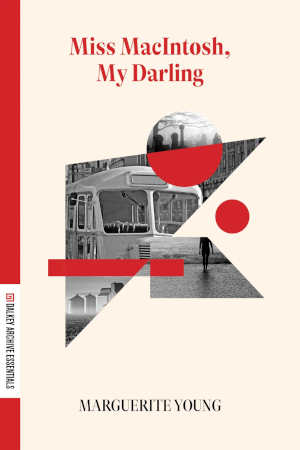
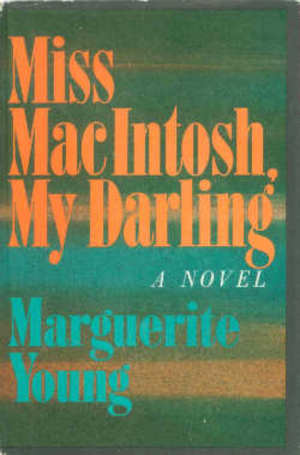
Marguerite Young – Miss MacIntosh, My Darling

Marguerite Young Miss MacIntosh, My Darling review, recensie en informatie Amerikaanse roman uit 1968. Op 3 mei 2025 verschijnt bij Dalkey Archive de heruitgave van de roman van de Amerikaanse schrijfster Marguerite Young. Hier lees je informatie over de inhoud van de roman, de schrijfster en over de uitgave. Er is geen Nederlandse vertaling verkrijgbaar.

Marguerite Young Miss MacIntosh, My Darling review, recensie en informatie

  • “An epic novel of mothers and daughters, rather than of fathers and sons, husbands and wives, or war and peace, and Young’s sentences, which marry the breadth of Whitman to the opulence of Nabokov, are among the most virtuosic ever produced by an American novelist.” (Ryan Ruby, The New Yorker)
  • “This is a search for reality through a maze of illusions and fantasy and dreams, ultimately asserting in the words of Calderon: ‘Life is a dream.” (Anaïs Nin)
  • Miss MacIntosh is a novel as infinite and mystifying as life itself.” (The Paris Review)

Marguerite Young Miss MacIntosh, My Darling

Miss MacIntosh, My Darling

Dalkey Archive Essentials

  • Auteur: Marguerite Young (Verenigde Staten)
  • Soort boek: Amerikaanse roman uit 1968
  • Taal: Engels
  • Uitgever: Dalkey Archive Press
  • Verschijnt: 3 mei 2024
  • Omvang: 1340 pagina’s
  • Uitgave: paperback / ebook
  • Prijs: € 29,95 / € 9,95
  • Waardering redactie: ∗∗∗∗ (uitstekend)
  • Boek bestellen bij: Amazon / Bol

Flaptekst van de roman van de Amerikaanse schrijfster Marguerite Young

This novel is one of the most ambitious and remarkable literary achievements of our time. It is a picaresque, psychological novel—a novel of the road, a journey or voyage of the human spirit in its search for reality in a world of illusion and nightmare. It is an epic of what might be called the Arabian Nights of American life. Marguerite Young’s method is poetic, imagistic, incantatory; in prose of extraordinary richness she tests the nature of her characters—and the nature of reality.

The novel is written with oceanic music moving at many levels of consciousness and perception; but the toughly fibred realistic fabric is always there, in the happenings of the narrative, the humor, the precise details, the definitions of the characters. Miss MacIntosh herself, who hails from What Cheer, Iowa, and seems downright and normal, with an incorruptible sense of humor and the desire to put an end to phantoms; Catherine Cartwheel, the opium lady, a recluse who is shut away in a great New England seaside house and entertains imaginary guests; Mr. Spitzer, the lawyer, musical composer and mystical space traveler, a gentle man, wholly unsure of himself and of reality; his twin brother Peron, the gay and raffish gambler and virtuoso in the world of sports; Cousin Hannah, the horsewoman, balloonist, mountain-climber and militant Boston feminist, known as Al Hamad through all the seraglios of the East; Titus Bonebreaker of Chicago, wild man of God dreaming of a heavenly crown; the very efficient Christian hangman, Mr. Weed of the Wabash River Valley; a featherweight champion who meets his equal in a graveyard—these are a few who live with phantasmagorical vividness in the pages of Miss MacIntosh, My Darling.

The novel touches on many aspects of life—drug addiction, woman’s suffrage, murder, suicide, pregnancy both real and imaginary, schizophrenia, many strange loves, the psychology of gambling, perfectionism; but the profusion of this huge book serves always to intensify the force of the central question: “What shall we do when, fleeing from illusion, we are confronted by illusion?” What is real, what is dream? Is the calendar of the human heart the same as that kept by the earth? Is it possible that one may live a secondary life of which one does not know?

In every aspect, Miss MacIntosh, My Darling stands by itself—in the lyric beauty of its prose, its imaginative vitality and cumulative emotional power. It is the work of a writer of genius.

A descendent of Brigham Young, Marguerite Young was born in Indiana on 26 August 1909 and spent most of her life in Greenwich Marguerite Young Miss MacIntosh, My Darling first edtion 1965Village, where she associated with writers like Richard Wright, Carson McCullers Truman Capote, and Gertrude Stein. In addition to Miss MacIntosh, My Darling she published two works of poetry, a work of nonfiction (Angel in the Forest), a collection of essays and stories (Inviting the Muses) and Harp Song for a Radical: The Life and Times of Eugene Victor Debs, which was published posthumously. Sge died 17 November 1995 at the age of 87 in Indianapolis, Indiana.

Bijpassende boeken en informatie

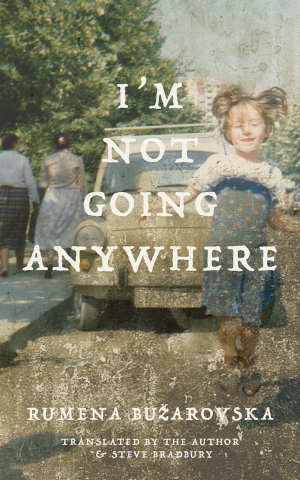
Rumena Bužarovska – I’m Not Going Anywhere

Rumena Bužarovska I’m Not Going Anywhere recensie en informatie over de inhoud van het boek met verhalen uit Noord-Macedonië. Op 4 april 2023 verschijnt bij Dalkey Archive Press de Engelse vertaling van het boek van de uit Noord-Macedonie afkomstige schrijfster Rumena Bužarovska. Er is geen Nederlandse vertaling van het boek verkrijgbaar of aangekondigd.

Rumena Bužarovska I’m Not Going Anywhere recensie en informatie

Als de redactie het boek leest, kun je op deze pagina de recensie en waardering vinden van I’m Not Going Anywhere.  Het boek is geschreven door Rumena Bužarovska. Daarnaast zijn hier gegevens van de uitgave en bestelmogelijkheden opgenomen. Bovendien kun je op deze pagina informatie lezen over de inhoud van het boek van de Noord-Mecedonische auteur Rumena Bužarovska.

Rumena Bužarovska I'm Not Going Anywhere Boek uit Noord-Macedonië

I’m Not Going Anywhere

  • Auteur: Rumena Bužarovska (Noord-Macedonië)
  • Soort boek: verhalen
  • Engelse vertaling: Steve Bradbury, Rumena Bužarovska
  • Uitgever: Dalkey Archive Press
  • Verschijnt: 4 april 2023
  • Omvang: 217 pagina’s
  • Uitgave: paperback
  • Prijs: $ 16,95
  • Boek bestellen bij: Amazon / Bol

Flaptekst van het boek van Rumena Bužarovska

Razor-sharp social commentary, Jane Austen for contemporary feminists unafraid to confront a dark world.

In her latest translated volume of collected short fiction, Rumena Buzarovska delivers more of what established her as “one of the most interesting writers working in Europe today.” Already a bestseller across her native Macedonia, I’m Not Going Anywhere is an unsentimental and hyperrealist collection in which Macedonians leave their country of origin to escape bleakness–only to find, in other locales, new kinds of desolation in theses dark, biting, and utterly absorbing stories.

Bijpassende boeken en informatie

João Almino – The Last Twist of the Knife

João Almino The Last Twist of the Knife recensie en informatie Braziliaanse roman. Op 18 maart 2021 verschijnt bij Dalkey Archive Press de Engelse vertaling van de roman Entre facas, algodão van de Braziliaanse schrijver João Almino.

João Almino The Last Twist of the Knife recensie en informatie

Als de redactie het boek leest, kun je op deze pagina de recensie en waardering vinden van de roman The Last Twist of the Knife. Het boek is geschreven door João Almino . Daarnaast zijn hier gegevens van de uitgave en bestelmogelijkheden opgenomen. Bovendien kun je op deze pagina informatie lezen over de inhoud van de roman van de Braziliaanse schrijver João Almino.

João Almino The Last Twist of the Knife Braziliaanse roman

The Last Twist of the Knife

  • Schrijver: João Almino (Brazilië)
  • Soort boek: Braziliaanse roman
  • Origineel: Entre facas, algodão (2017)
  • Engelse vertaling: Elizabeth Lowe
  • Uitgever: Dalkey Archive Press
  • Verschijnt: 18 maart 2021
  • Omvang: 122 pagina’s
  • Uitgave: Paperback / Ebook
  • Boek bestellen bij: Amazon / Bol

Flaptekst van de nieuwe roman van João Almino

After a quarrel, an ageing lawyer leaves his wife and travels from Brasília to the dry, lawless backlands of Brazil’s northeastern plateau, where he grew up. He has vague plans to start a new life, to buy a ranch and farm cotton, but unresolved childhood obsessions, fantasies, traumas resurface, threatening to overwhelm his very sense of identity. Consumed with thoughts of revenge against the man who murdered his father when he was only two, he discovers that he may in fact have been the lovechild of his rich godfather—the man who ordered the hit—and may therefore be the half-brother of the girl for whom he harbored an adolescent sexual fixation. In this masterful novel rich in local color, João Almino creates a complex, damaged narrator inexorably dragged down into the vortex of his own treacherous memories.

Bijpassende boeken en informatie